
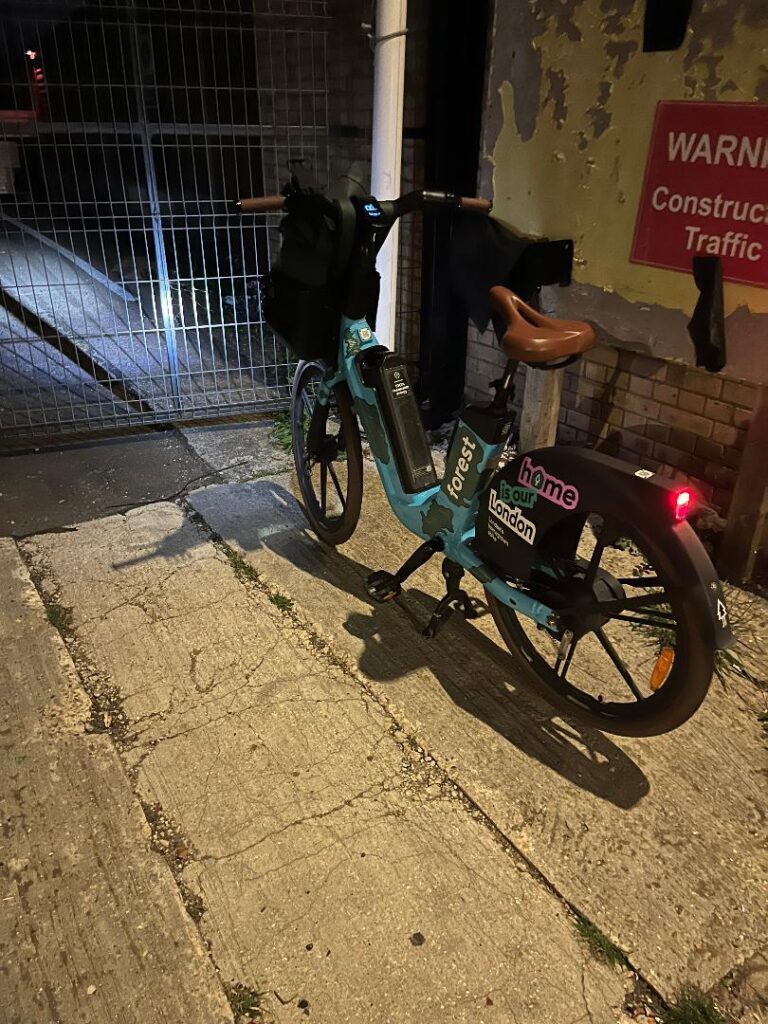
Electric bikes are now a daily sight on UK streets, and there are more e-bike helmets to choose from than ever. In this guide I’ve picked the best e-bike helmets for UK commuters, all rated to the Dutch NTA 8776 standard for faster e-bikes. For people using shared e-bikes such as Lime, Voi and Forest, it’s useful to understand how these bikes behave in real use. Most UK bike-share e-bikes are limited to around 15.5 mph under motor assistance and are relatively heavy, which means they tend to feel steady rather than fast and rarely gain much additional speed through pedalling once the assist has cut out. That said, these bikes are heavy, and so if you did come off, the downwards force will be impacted by this.
Affiliate Disclosure
Some links in this guide are affiliate links. If you purchase through them, fleethopper.co.uk may earn a small commission at no extra cost to you. This helps support independent commuting guides and product testing. As an Amazon Associate I earn from qualifying purchases.
For riders on their own UK-legal e-bikes, the experience can be slightly different. While motor assistance still cuts out at 15.5 mph, lighter frames and gearing can make it easier to accelerate to that assisted speed and then continue pedalling beyond it under rider power. In those situations, some commuters may choose to look at the best NTA 8776 bicycle helmets as an option, simply because they are tested to higher impact energies and offer broader coverage than standard cycling helmets.
In this guide we review some of the best NTA 8776 bicycle helmets for commuters, explain why the standard is relevant, and help you make an informed choice.
What Is an NTA 8776 Bicycle Helmet?
An NTA 8776 bicycle helmet is certified to a Dutch standard specifically designed for electric bicycles and speed pedelecs. Helmets with this certification have been tested against higher impact forces than standard cycling helmets, typically up to speeds of 28 mph (45 km/h), and often provide extra coverage at the sides and back of the head.
Compared to EN 1078, the more common UK cycling helmet standard, NTA 8776 reflects testing for faster or heavier e-bike scenarios. It is not a legal requirement in the UK but is useful if you ride faster on e-bikes, or simply want a helmet tested to a higher energy impact benchmark.
What is MIPS?
Just a word on MIPS, this is an additional helmet feature which is not always a feature in NTA 8776 helmets, but often is. MIPS stands for Multi-directional Impact Protection System, this feature of many helmets helps to redirect energy away from the head when a fall occurs, this means less pressure on your head. In real-world accidents, many impacts are not straight down. In those cases, a well-fitting EN 1078 helmet with MIPS may offer more benefit than an NTA 8776 helmet without MIPS, depending on how the crash unfolds. This is why certification alone should not be the only deciding factor when choosing a helmet.
In this article, we will be looking at both NTA 8776 helmets with, and without MIPS, we’ve made sure to include this in each individual feature.
Where NTA 8776 Certification Matters for E-Bike Commuters
All personally owned, and app-share e-bikes in the UK, including Lime, Voi, and Forest, have motor assistance limited to 15.5 mph. Riders can go faster only through extra pedalling effort which could take you a few mph over 15.5 mph. That said, I have ridden the app-share bikes when the assist has cut out due to exceeding 15.5 mph, and they are heavy and do not have gears, making it very difficult to go much faster than this.
This means a standard EN 1078 helmet is adequate for most city commutes, as in the Netherlands their e-bikes can ride much faster than ours. An NTA 8776 bicycle helmet becomes relevant when:
You regularly ride faster than what an average cyclist rides
You want additional reassurance that your helmet has been tested for higher energy impacts
Put simply, NTA 8776 is about how the helmet was tested, not a guarantee of being safer in every crash.
Top NTA 8776 E-Bike Helmets for Commuters
Here are some of the best NTA 8776 bicycle helmets that combine certification with commuter-friendly features.
1. Lumos Ultra E-Bike Smart Helmet
- Certification: NTA 8776 & MIPS
- Features: Integrated front and rear LED lights, brake indicators, app
- Best for: Urban riders prioritising visibility & predictability
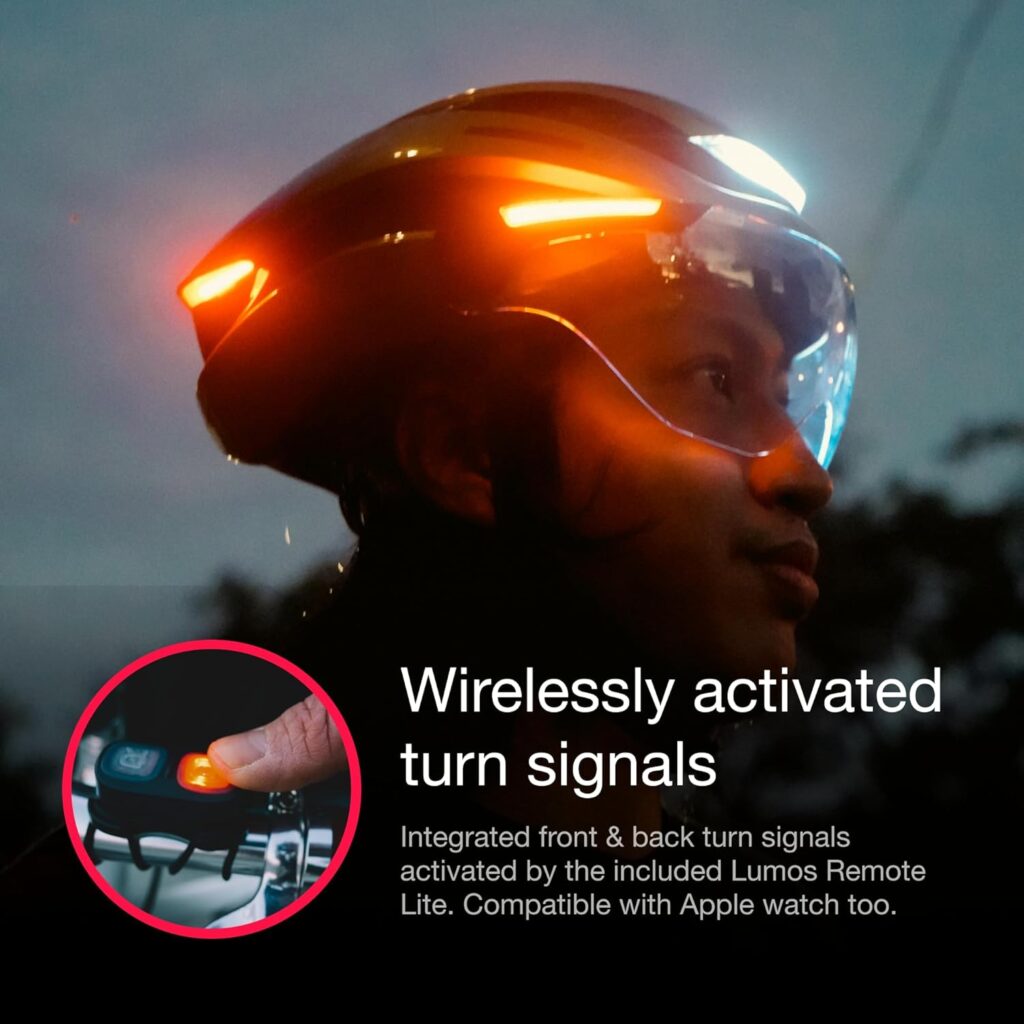
The Lumos Ultra combines NTA 8776 & MIPS certification with practical visibility features, making it ideal for UK commuting, especially in low light. If you’ve been hunting for a Lumos Ultra e-bike helmet review, the short version is that the lights are the reason to buy it: front and rear LEDs plus brake indicators are built in, so you’re easier to see without clipping anything extra on.
2. ABUS Pedelec 2.0 ACE
- Certification: NTA 8776
- Features: Integrated rear LED light, adjustable fit system, extended coverage
- Best for: Commuters who want certified protection from a renowned safety company
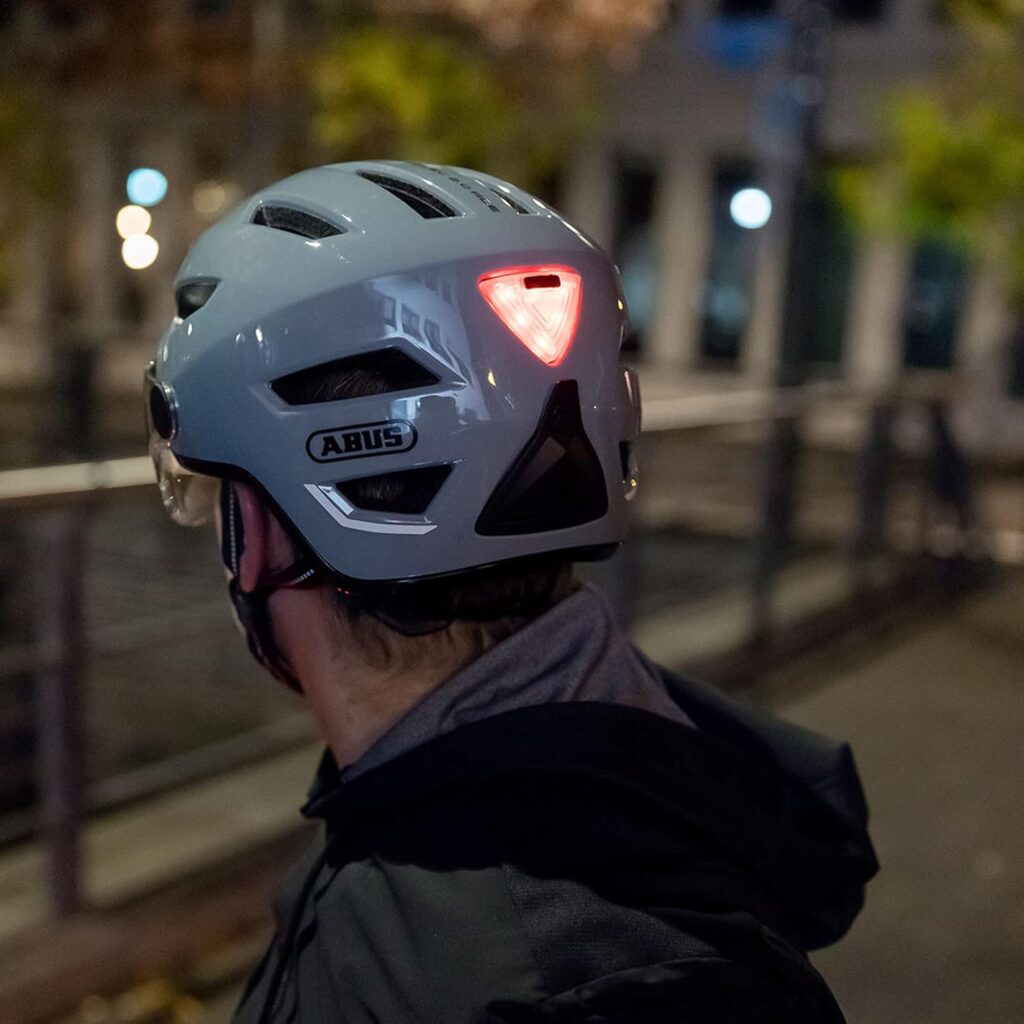 ABUS Pedelec 2.0 ACE
The Abus Pedelec 2.0 ACE is a popular choice among urban e-bike commuters. It keeps a relatively clean profile while offering NTA 8776 certification, additional head coverage, and a built-in rear light for visibility in traffic. The fit system is easy to adjust, which suits riders who use their helmet across different bikes or journeys.
3. GO-OFF Pilot 3-in-1 Helmet
- Certification: NTA 8776
- Features: Modular design, adaptable coverage
- Best for: Riders wanting certification without too much extra cost
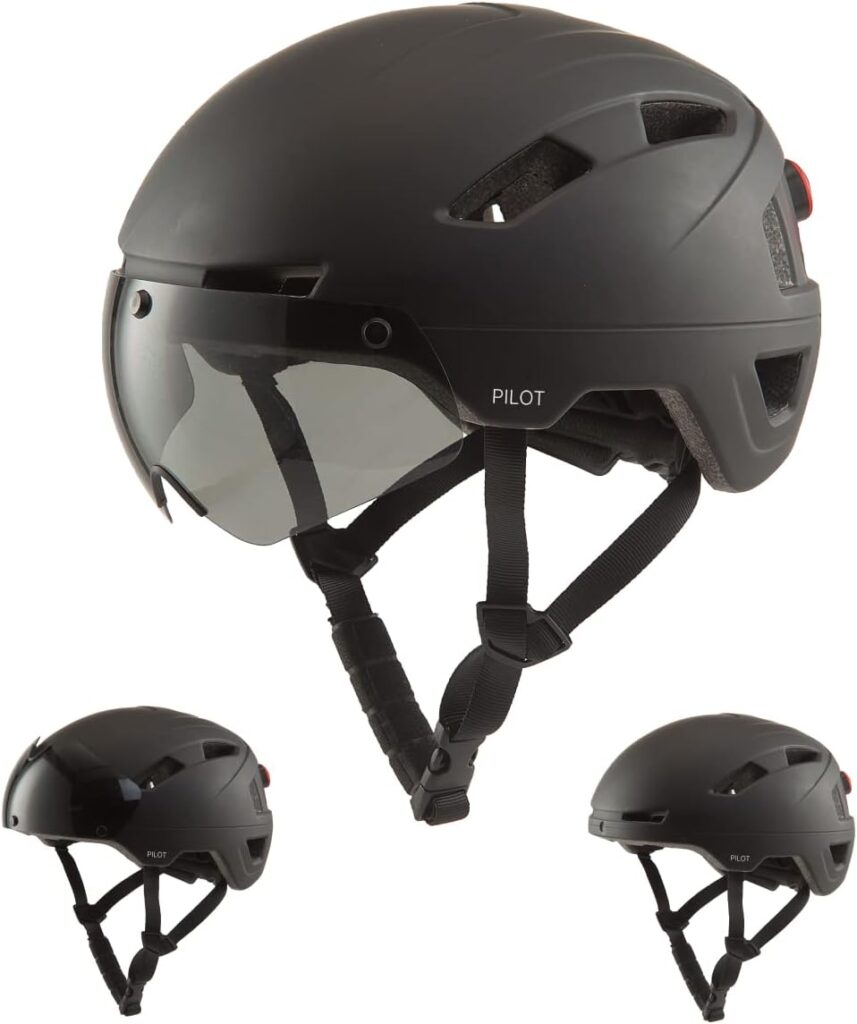
The modular GO-OFF Pilot is versatile, comfortable, and designed for commuters who want a single helmet that works in multiple situations. GO-OFF is a Dutch brand, which is where NTA 8776 certification comes from.
4. ABUS HYP-E Bike Helmet
- Certification: NTA 8776
- Features: Integrated front and rear lights, turn indicators with handlebar remote, extended coverage
- Best for: Urban commuters who prioritise predictability alongside certified protection
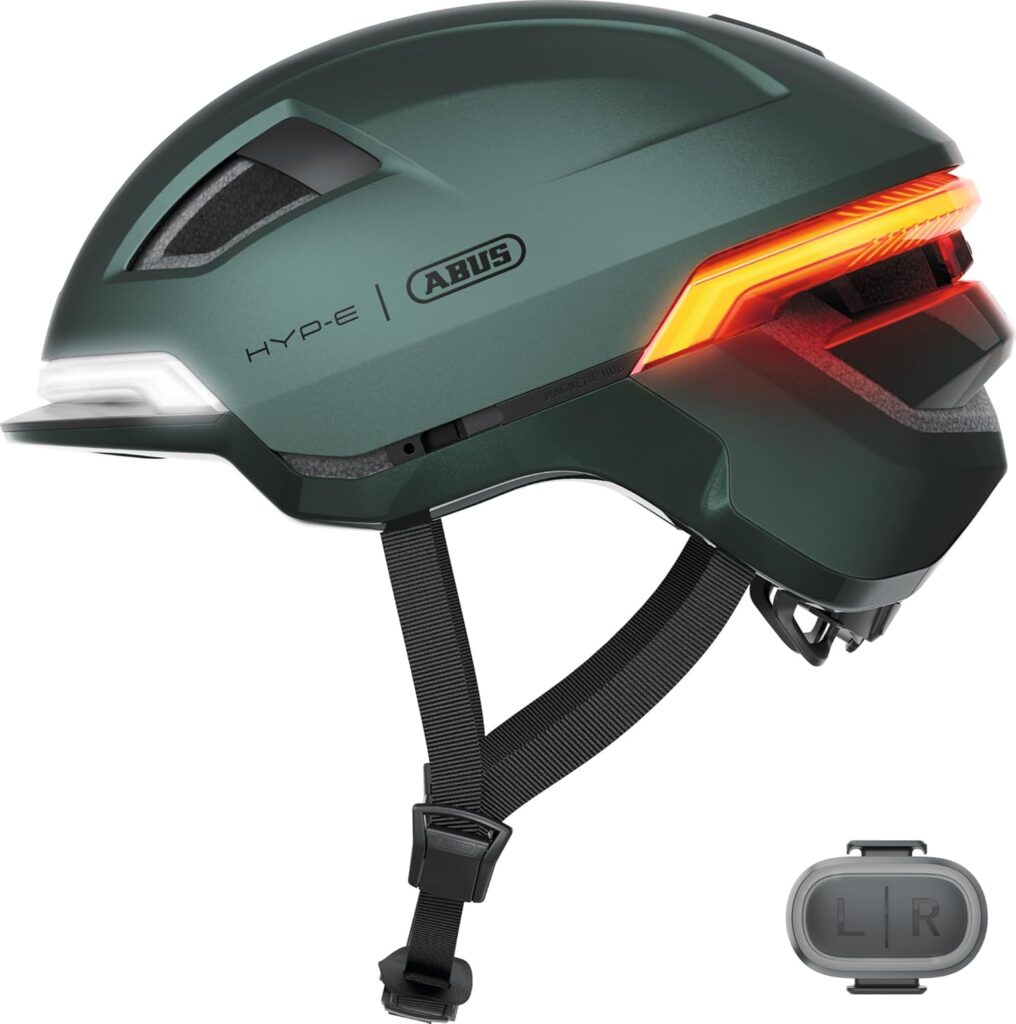
The ABUS HYP-E is a feature-rich commuter helmet that combines NTA 8776 certification with built-in lighting and indicator signals designed for city riding. It suits riders who spend time in traffic, who want to be predictable to drivers, and who want to be more visible at junctions, while still wearing a helmet tested to a higher impact standard.
Do You Need a Full Face E-Bike Helmet?
Full face e-bike helmets, with a chin bar and sometimes a visor, are mostly designed for e-mountain biking and fast speed pedelecs, where you’re more likely to land face first. For city commuting on a hired or 15.5 mph e-bike, they’re heavy, hot and awkward to carry once you’ve parked up, and most people simply won’t wear them.
If you do want one, check the label rather than the marketing: many full face helmets built for mountain biking are tested to EN 1078, not NTA 8776. For London commuting I’d go for one of the open face NTA 8776 helmets above, and if you want extra eye protection, the GO-OFF Pilot’s magnetic visor is a good middle ground.
How to Choose the Best E-Bike Helmet
When comparing helmets, consider:
- Fit: A helmet that fits properly performs as intended.
- Ventilation: Urban commutes can be warm, so airflow is important.
- Visibility: Integrated lights or reflective details enhance safety.
- Certification: Is it actually NTA 8776 certified/from a trusted brand? Is it MIPS certified, and does this matter to you?
Not sure you need NTA 8776 at all? My guide to whether you need an NTA 8776 helmet for an e-bike explains the standards. If you’d rather have something cheaper or easier to carry, see the best budget bicycle helmets and the best folding bike helmets.
Final Thoughts on the Best E-Bike Helmets for UK Commuters
If you’re searching for the best e-bike helmet for commuting in the UK, these three stand out:
Lumos Ultra E-Bike Helmet: ideal for visibility-conscious commuters
ABUS Pedelec 2.0 ACE: simple, practical certified protection
GO-OFF Pilot 3-in-1 Helmet:affordable & adaptable
For most shared e-bike riders, NTA 8776 certification isn’t essential. For private e-bike riders or those riding faster than motor-assisted speeds, it is an objective indicator that the helmet has been tested for higher energy impacts. MIPS is good either way, but is still a choice.
Riding a hire bike rather than your own? See how Lime, Forest, Voi and Bolt compare on price in my full London comparison.

6 Comments